
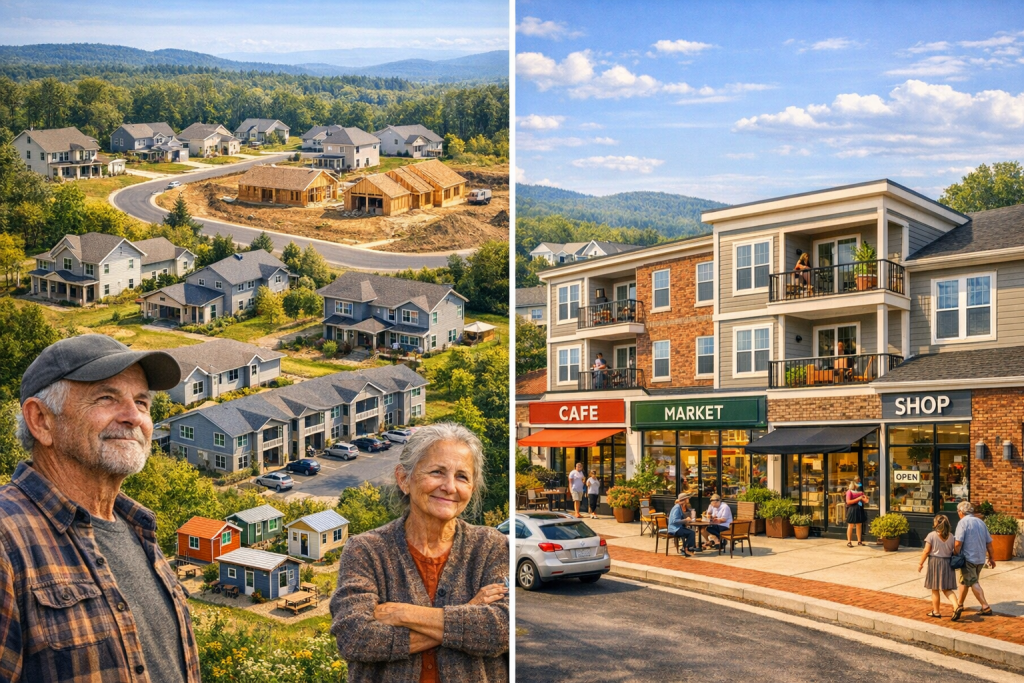
Housing is one of the most pressing challenges facing communities today. For smaller towns and rural areas, the challenge can feel even greater: how do you provide housing that meets residents’ needs while staying within the limits of local infrastructure — water, sewer, streets, electrical systems, emergency services, and more?
As laws change, some decisions are preempted for a community. Knowing what is changing and whether current community regulations are aligned can be a challenge. Leaning into a trusted resource for this analysis enables communities to maintain confidence in their ability to govern effectively.
What kinds of housing should a small or rural community consider as the mid-2020’s give way to 2030? The most common answer is “affordable.” This answer is also one of the most challenging. What makes housing affordable? According to Mia Chapman’s article, referencing the definition from the U.S. Department of Housing and Urban Development, defines “affordable housing” as housing on which the occupant is paying no more than 30 percent of gross income for housing costs, including utilities. Starting with this foundation, communities can explore a range of housing types that together create a flexible, resilient housing ecosystem. Here are some considerations for small-format and mixed-use options.
Small-format or “missing middle” housing. Missing middle housing includes duplexes, fourplexes, accessory dwelling units (ADUs), tiny homes, and courtyard apartments. Many communities have these options in their ordinances, especially where zoning has been adopted. But if those ordinances are more than ten years old, they may limit where these housing types can be built — or prohibit them entirely.
A growing practice is to update local codes to allow more small-format housing. ADUs, for example, can expand housing options with minimal impact on surrounding properties and at a lower cost. They’re especially helpful for multi-generational households, offering privacy and independence while keeping families close.
Allowing duplexes or fourplexes on lots previously limited to single-family homes supports infill development without disrupting neighborhood character. Tiny homes (not on trailers) can function as ADUs or be clustered on a single lot, provided emergency access and infrastructure needs are addressed. When done well, these small-scale solutions can strengthen community connections at a fraction of the cost of traditional single-family construction.
Mixed-use and emerging rural housing trends. Improving a community’s supply of affordable housing begins with understanding what you already have. A housing study is an excellent tool for assessing the condition, age, and distribution of your housing stock.
Equally important is understanding what your current and future residents want. Not everyone seeks single-family homeownership. Some prefer low-maintenance living. Others value the social connections of apartment life. Many want to live close to activity rather than drive to it.
The third piece is understanding your regulations. What types of housing are allowed? Where? Under what conditions? These rules shape what becomes possible — or impossible — as your community grows.
If this topic resonates with you or your community, leave a reply. Bolte Planning Group is ready to assist in the evaluation of any of these areas/solutions. Contact info@bolteplanninggroup.com for more information or to schedule a session.